How to Prepare Your Truck for a Long Trip
Long-distance trucking requires more preparation than simply filling the fuel tanks and entering a destination into the GPS.
When you are preparing for an OTR trip that may cover hundreds or even thousands of miles, a small mechanical problem can quickly turn into a major delay. A damaged tire, low fluid level, faulty light, missing document, or poorly secured load can cost valuable time and create serious safety problems.
A good truck driver prepares both the truck and the trip before leaving.
From inspecting tires and brakes to checking weather, planning fuel stops, organizing the sleeper cab, and reviewing your Hours of Service, preparation can make the difference between a smooth trip and a stressful one.
Here are the most important things to check before taking your semi-truck on a long trip.

1. Start With a Complete Pre-Trip Inspection
The most important step before a long trip is a thorough pre-trip inspection.
Federal Motor Carrier Safety Administration guidance states that drivers must be satisfied that important vehicle components are in good working order before operating a commercial vehicle. These include brakes, steering, lights, tires, wheels, mirrors, coupling devices, windshield wipers, and emergency equipment.
Even if the truck drove perfectly yesterday, you should not assume that everything is still in good condition today.
Walk around the tractor and trailer carefully and look for anything unusual.
Important inspection areas include:
- Tires
- Wheels and rims
- Brakes
- Suspension
- Steering components
- Lights and reflectors
- Mirrors
- Windshield
- Wipers
- Air lines
- Electrical connections
- Fifth wheel
- Kingpin
- Landing gear
- Trailer doors
- Cargo securement
- Fluid leaks
A complete inspection becomes even more important before a long trip because you may soon be hundreds of miles away from your terminal or maintenance shop.
2. Inspect Every Tire
Tires are one of the most important components on a commercial truck.
A tire problem can cause:
- Roadside breakdowns
- Delivery delays
- Damage to the trailer
- Loss of control
- Expensive repairs
Before leaving, inspect the tractor and trailer tires carefully.
Look for:
- Cuts
- Cracks
- Bulges
- Punctures
- Uneven wear
- Exposed cords
- Objects stuck in the tread
- Damaged valve stems
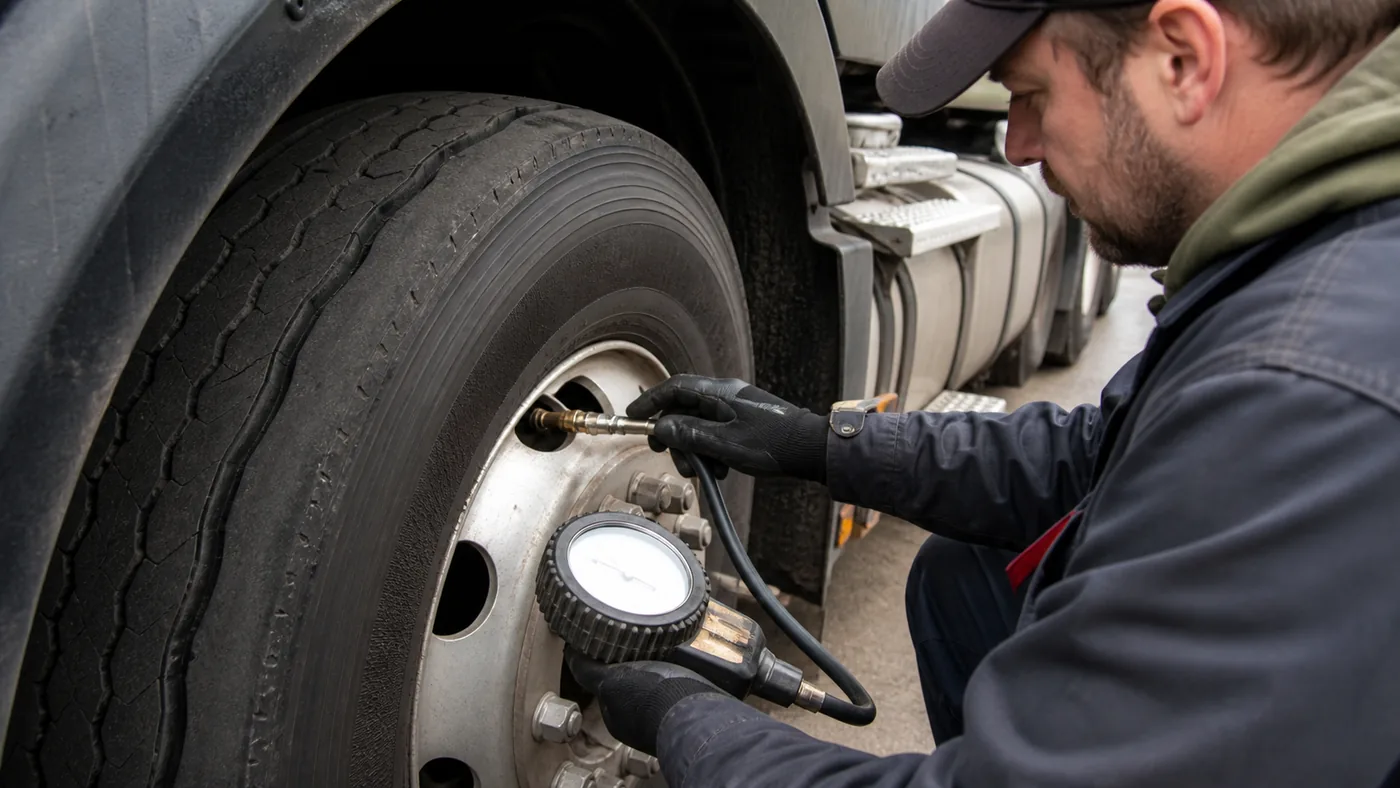
Check the tread condition and verify that tire pressure is appropriate for your equipment and load.
NHTSA recommends checking tires before long trips and notes that tire pressure should be checked when tires are cold for the most accurate reading.
Do not forget the inside tires on dual-wheel assemblies. They can be harder to inspect but are just as important.
3. Check Wheels and Lug Nuts
While inspecting the tires, examine the wheels.
Look for:
- Cracked rims
- Bent wheels
- Missing lug nuts
- Loose lug nuts
- Rust trails around lug nuts
- Oil or grease around hubs
- Damaged valve stems
Rust marks extending outward from a lug nut may indicate movement and should be investigated.
Also check wheel hubs for signs of leaking oil or grease.
A wheel problem should never be ignored, especially before a long highway trip.
4. Inspect the Brakes
A loaded tractor-trailer requires much more stopping distance than a passenger vehicle, making the braking system one of the most critical safety systems on the truck.
Inspect accessible brake components for signs of damage or excessive wear.
Depending on your equipment, check areas such as:
- Brake hoses
- Air lines
- Brake chambers
- Slack adjusters
- Brake drums or discs
- Air pressure
- Warning systems
- Parking brakes
Listen for unusual air leaks.
After starting the truck, monitor the air-pressure gauges and warning systems.
If you notice anything unusual with the brakes, have the problem inspected before beginning the trip.
Never assume that a minor brake problem will remain minor for another thousand miles.
5. Check All Fluids
Long trips put the engine, transmission, cooling system, and other components through many hours of continuous operation.
Check important fluid levels before leaving.
These may include:
Engine Oil
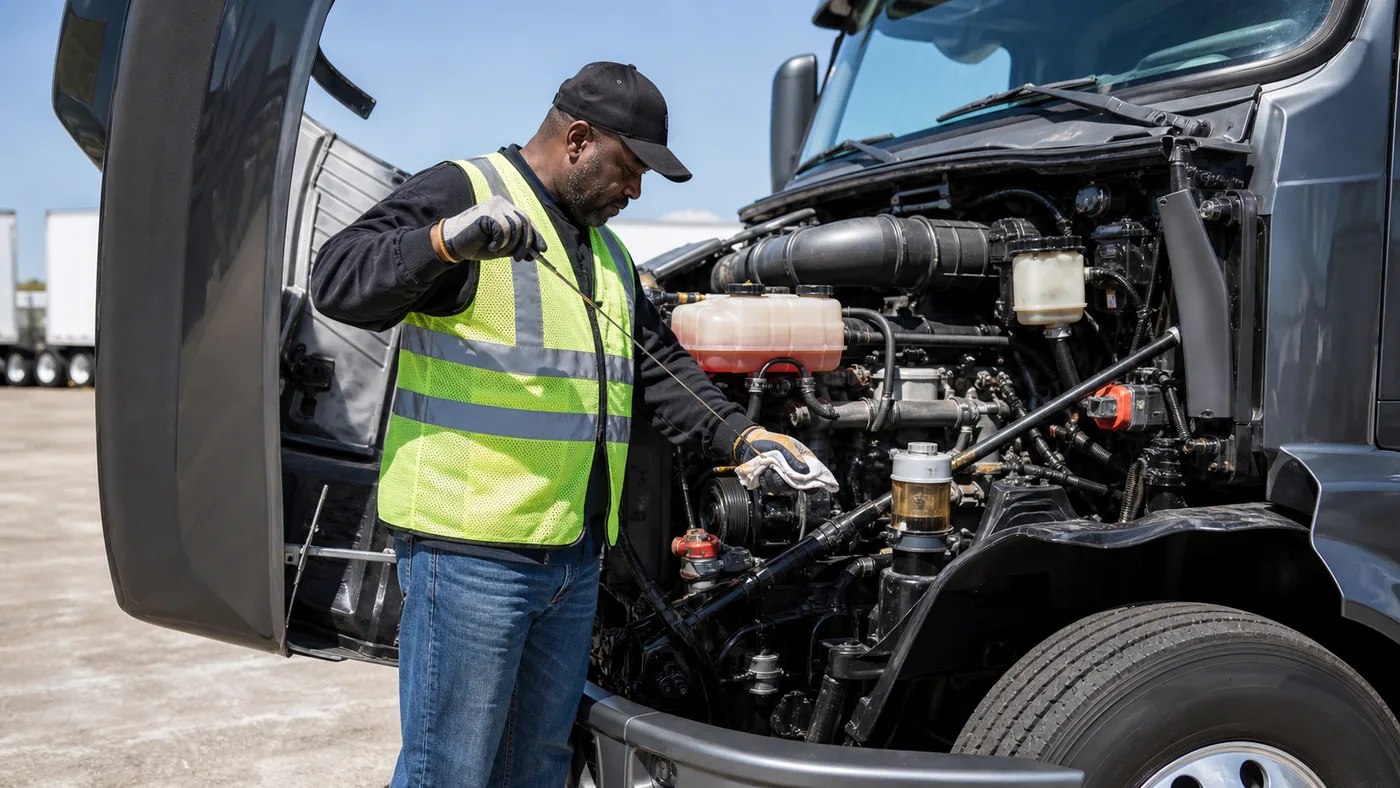
Check the oil level according to the manufacturer's procedure.
Look underneath the truck for signs of oil leaks.
Coolant
Make sure the coolant level is correct.
An overheating engine can leave you stranded and may cause expensive engine damage.
Power Steering Fluid
Low fluid can affect steering performance and may indicate a leak.
Windshield Washer Fluid
A dirty windshield can become a serious visibility problem during rain, snow, insects, or road spray.
Keep enough washer fluid for the conditions you expect to encounter.
Diesel Exhaust Fluid
If your truck uses a Selective Catalytic Reduction system, check the DEF level before beginning a long trip.
Running too low on DEF can create unnecessary problems during the route.
6. Look for Leaks
Before moving the truck, look underneath the tractor and trailer.
Watch for unusual puddles or wet areas.
Possible leaks may involve:
- Engine oil
- Coolant
- Fuel
- Power steering fluid
- Transmission fluid
- Differential oil
- Hub oil
Not every drop underneath a truck indicates a serious problem. For example, condensation from the air-conditioning system may be normal.
However, an unexplained fluid leak should always be investigated before a long trip.
7. Inspect Belts and Hoses
When the hood is open, examine visible belts and hoses.
Look for:
- Cracks
- Fraying
- Excessive wear
- Loose connections
- Swelling
- Fluid around hose connections
A relatively inexpensive belt or hose can stop an entire truck if it fails on the highway.
Finding these problems in a parking lot or terminal is much easier than dealing with them on the shoulder of an interstate.
8. Test Lights and Reflectors
Make sure all required lighting equipment works correctly.
Check:
- Headlights
- High beams
- Turn signals
- Brake lights
- Tail lights
- Clearance lights
- Marker lights
- Hazard lights
- License plate light
Also inspect reflective tape and reflectors.
Lights are especially important during:
- Night driving
- Rain
- Snow
- Fog
- Low-visibility conditions
FMCSA specifically includes lighting devices and reflectors among the equipment drivers should verify before operating a commercial vehicle.
Clean dirty lights before leaving. Even a functioning light becomes less effective when covered by snow, mud, or road grime.
9. Check the Windshield, Mirrors, and Wipers
Visibility is essential during long-distance driving.
Inspect the windshield for:
- Large cracks
- Chips
- Damage that affects visibility
- Excessive dirt
Make sure your mirrors are:
- Secure
- Clean
- Properly adjusted
Inspect the windshield wipers and verify that they operate correctly.
If rain or snow is expected during your trip, replacing worn wiper blades before departure can save you a major headache later.
10. Inspect the Fifth Wheel and Coupling
One of the most important checks on a tractor-trailer is the connection between the tractor and trailer.
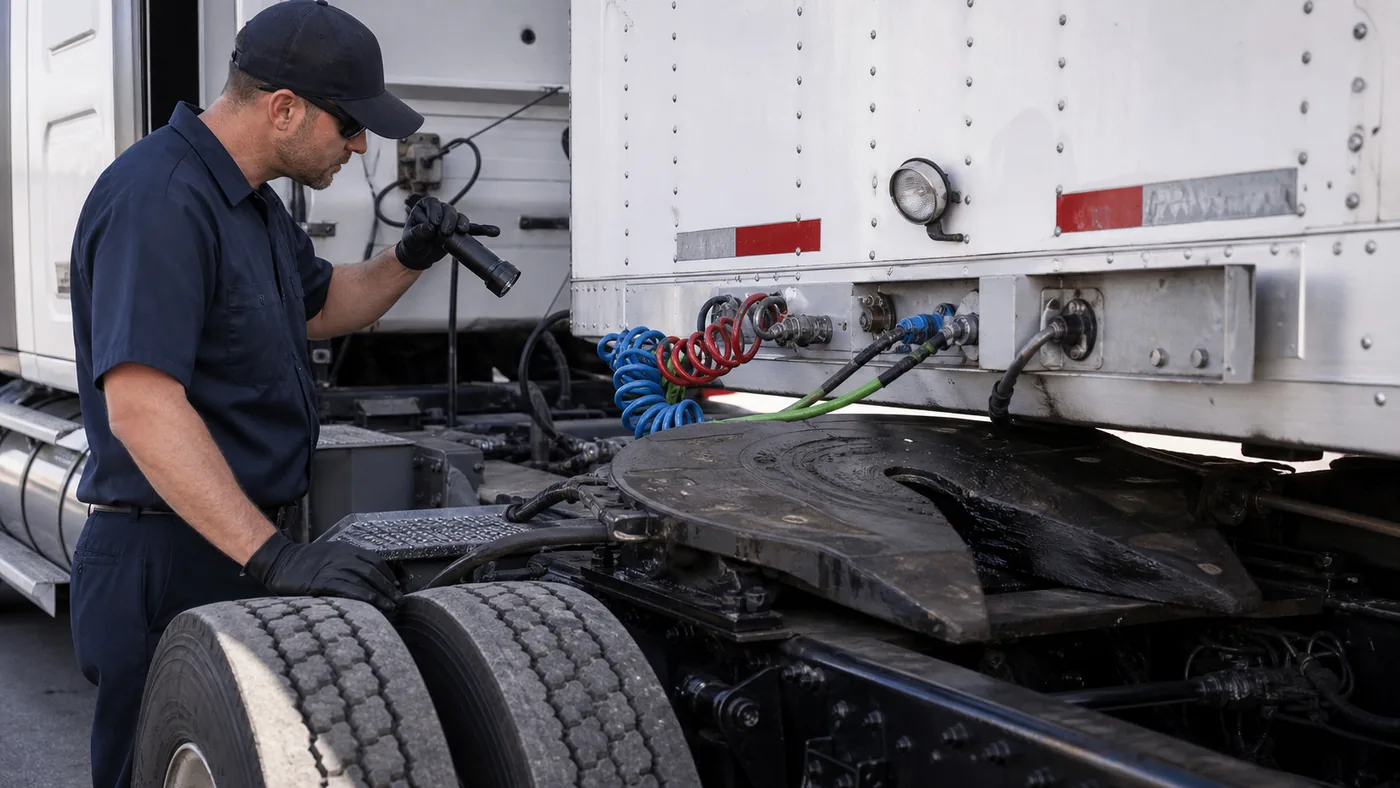
Inspect the fifth wheel and coupling system carefully.
Make sure:
- The fifth wheel is properly positioned
- The locking jaws are fully engaged around the kingpin
- There is no visible gap between the trailer apron and fifth wheel
- The release handle is properly positioned
- Air and electrical lines are connected correctly
- Lines are not dragging or damaged
Before moving the trailer, perform the appropriate tug test according to your procedures.
Also inspect the trailer landing gear and make sure it is completely raised and secured before driving.
11. Inspect the Trailer
Do not focus only on the tractor.
Your trailer also needs a complete inspection before a long trip.
Check:
- Trailer tires
- Wheels
- Brakes
- Suspension
- Lights
- Reflective tape
- Doors
- Hinges
- Latches
- Roof
- Side panels
- Landing gear
For a dry van or reefer, inspect the trailer for obvious damage or holes that could expose freight to weather.
Make sure rear doors close and latch correctly.
If you are pulling a reefer, also inspect the refrigeration equipment according to your company's procedures and verify that the temperature settings match the load requirements.
12. Make Sure the Cargo Is Properly Secured
A truck can be mechanically perfect and still be unsafe if the cargo is loaded incorrectly.
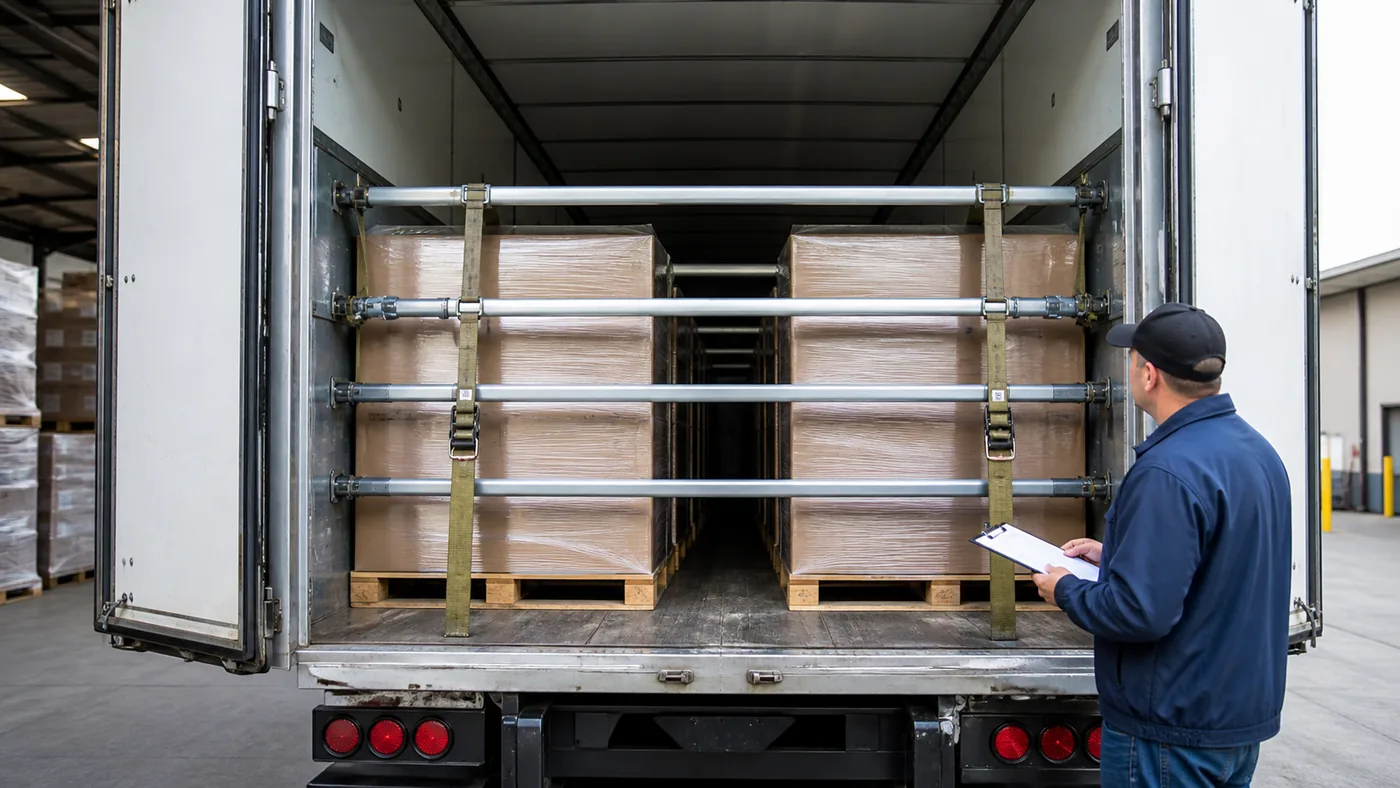
FMCSA regulations require cargo to be properly distributed and adequately secured before departure.
Depending on the type of freight, you may need to check:
- Straps
- Chains
- Load bars
- Blocking
- Bracing
- Tarps
- Edge protectors
- Cargo seals
Make sure cargo cannot move significantly during acceleration, braking, or turns.
Check Weight Distribution
Cargo weight should also be distributed correctly.
Pay attention to:
- Steer axle weight
- Drive axle weight
- Trailer tandem weight
- Gross combination weight
A truck can be under its total gross-weight limit and still have too much weight on one axle group.
For heavy loads, using a certified truck scale before beginning the main portion of the trip can help identify weight-distribution problems.
13. Make Sure You Have Required Emergency Equipment
Long-distance truck drivers should be prepared for unexpected situations.
FMCSA rules require applicable commercial vehicles to carry certain emergency equipment, and drivers must ensure required equipment is available and ready for use.
Depending on the vehicle and operation, important emergency items can include:
- Warning triangles
- Fire extinguisher
- Spare fuses where applicable
- Flashlight
- Reflective vest
- Work gloves
It is also useful to carry practical roadside supplies such as:
- Extra flashlight batteries
- Basic tools
- Phone charger
- Power bank
- Bottled water
- Warm clothing
- Rain gear
Drivers operating in winter climates may need additional equipment depending on company policy, route, and state requirements.
14. Check Your Fuel Before Departure
Running low on fuel is an avoidable problem.
Before leaving, check:
- Diesel fuel level
- DEF level
- Expected fuel consumption
- Company-approved fuel stops
Instead of waiting until the tanks are nearly empty, identify possible fuel stops before starting the trip.
Fuel planning becomes especially important in areas where truck stops are far apart.
It can also help you avoid unnecessary stops that waste driving time.
15. Check the Weather Along the Entire Route
The weather at your starting point does not tell you what conditions will be like hundreds of miles away.
An OTR trip may move through several climate zones.
You could begin the day in sunshine and encounter:
- Heavy rain
- Snow
- Ice
- High winds
- Fog
- Thunderstorms
- Extreme heat
Check weather conditions for the entire route, not only the destination.
Pay particular attention to mountain passes and areas known for severe winter weather or strong crosswinds.
If dangerous conditions are expected, plan alternative routes or stopping locations when appropriate.
Never allow a delivery schedule to pressure you into driving at a speed that is unsafe for the conditions.
16. Plan a Truck-Safe Route
Do not rely blindly on a normal passenger-car navigation app.
Commercial trucks may face restrictions involving:
- Low bridges
- Weight limits
- Truck-prohibited roads
- Hazmat restrictions
- Narrow streets
- Height restrictions
- Construction zones
Before leaving, verify the route using reliable commercial-trucking navigation resources.
Know where you will:
- Enter and exit highways
- Fuel
- Stop for breaks
- Deliver or pick up
- Park at the end of your driving period
Also check the final miles approaching the customer.
Many trucking problems happen close to the destination when drivers accidentally enter residential streets or roads unsuitable for tractor-trailers.
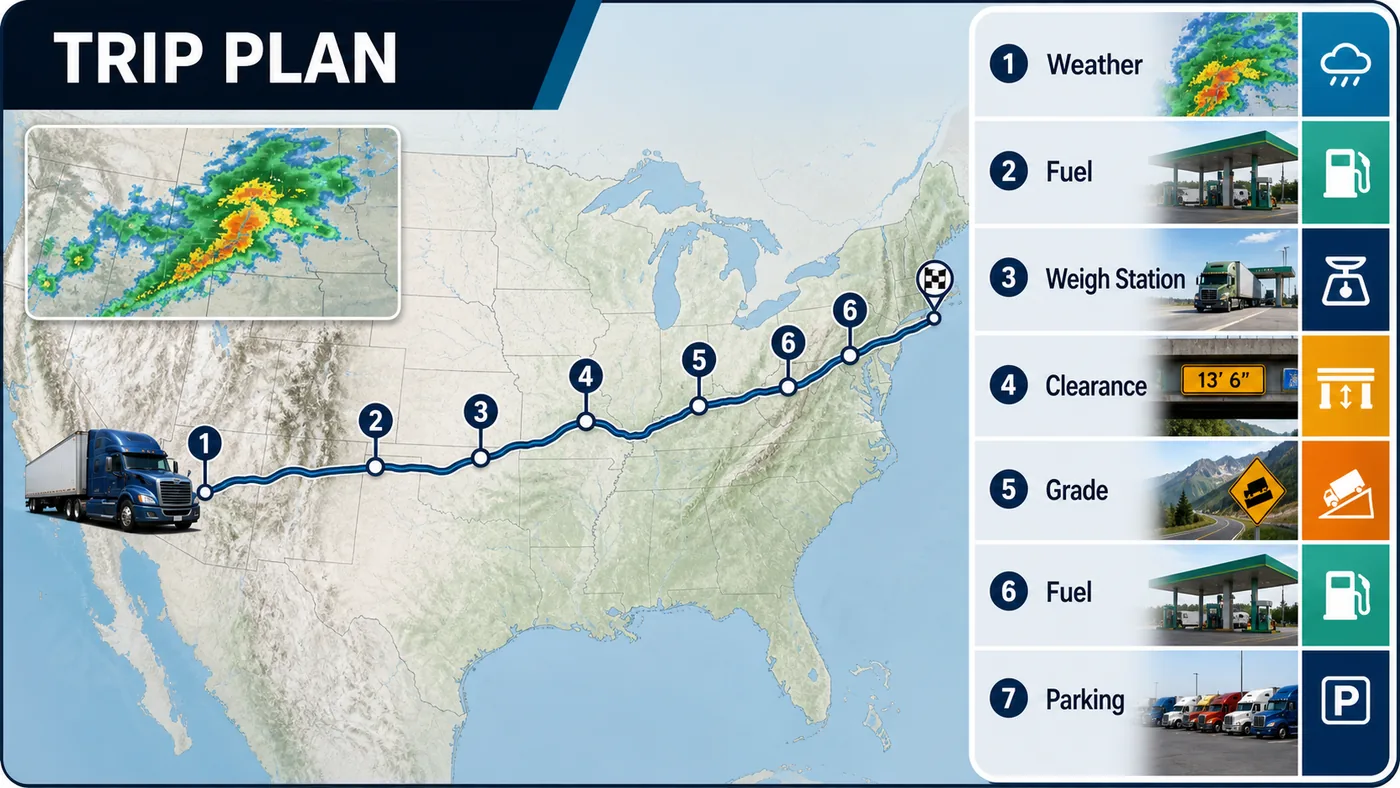
17. Plan Your Parking Before You Start Driving
Truck parking can be difficult to find in many parts of the United States.
Waiting until the last few minutes of your available driving time to look for parking can create unnecessary stress.
Before beginning the trip, identify several possible stopping locations.
These might include:
- Truck stops
- Rest areas
- Company terminals
- Customer facilities
- Approved parking areas
Always have a backup option.
A truck stop that normally has plenty of spaces may be completely full when you arrive.
Planning parking in advance is especially important when traveling near major metropolitan areas.
18. Check Your ELD and Available Hours
Before starting a long trip, review your Electronic Logging Device.
Check:
- Available driving hours
- On-duty hours
- Cycle hours
- Previous logs
- Required breaks
- Remaining weekly hours
Do not plan a 600-mile day if your available Hours of Service make it impossible.
A realistic trip plan should consider both mileage and available legal driving time.
Also make sure the ELD itself is functioning correctly before departure.
19. Review Delivery Information
Before leaving, confirm the details of your shipment.
You should know:
- Shipper address
- Receiver address
- Pickup number
- Delivery number
- Appointment time
- Contact information
- Special instructions
- Trailer number
- Seal number when applicable
Check whether the facility has special requirements.
Some customers may have:
- Specific truck entrances
- Appointment-only receiving
- Overnight parking restrictions
- Special check-in procedures
- PPE requirements
Knowing this information before arrival can save a lot of time.
20. Check Your Documents
Before an OTR trip, make sure you have the documents required for your operation.
These may include:
- Commercial Driver's License
- Medical certification information as applicable
- Registration
- Insurance documentation
- Shipping papers
- Bills of lading
- Permits
- Fuel or company cards
If transporting specialized freight, additional documentation may be required.
Keep important documents organized and easily accessible.
Searching through a messy sleeper while standing at a customer gate or inspection station is unnecessary stress.
21. Prepare Your Sleeper Cab
For OTR drivers, the truck is more than a workplace.
During a long trip, the sleeper becomes your temporary home.
Before leaving, make sure you have enough basic supplies.
Useful items include:
Clothing
Bring enough clothing for the expected length of your trip.
Consider different weather conditions along the route.
Bedding
Bring comfortable:
- Sheets
- Blankets
- Pillows
Good sleep is extremely important for professional drivers.
Food and Water
Keeping food inside the truck can save both time and money.
Common choices include:
- Bottled water
- Fruit
- Sandwich ingredients
- Oatmeal
- Rice
- Canned foods
- Nuts
- Healthy snacks
If your truck has a refrigerator and microwave, preparing meals becomes much easier.
Personal Hygiene Supplies
Consider packing:
- Towels
- Toothbrush
- Toothpaste
- Soap
- Shampoo
- Deodorant
- Wet wipes
- Shower supplies
Many truck stops provide showers, but having your own supplies makes life easier.
Electronics
Bring necessary:
- Phone chargers
- Headphones
- Laptop
- Tablet
- Power bank
- Charging cables
Keep backup charging equipment whenever possible.

22. Carry Seasonal Equipment
Your equipment should match the conditions you expect to encounter.
Winter Trips
Consider items such as:
- Warm jacket
- Gloves
- Winter boots
- Extra blankets
- Ice scraper
- Windshield washer fluid suitable for freezing temperatures
- Food and water
- Required tire chains where applicable
Summer Trips
Check:
- Air-conditioning system
- Engine cooling system
- Tire condition
- Coolant level
Carry enough drinking water.
High temperatures put additional stress on tires, cooling systems, and drivers.
23. Charge Your Phone and Communication Equipment
Your phone is an important tool on the road.
It may be needed to:
- Contact dispatch
- Call customers
- Report breakdowns
- Check weather
- Find truck stops
- Communicate during emergencies
Start your trip with a charged phone.
Keep a vehicle charger in the truck and consider carrying a power bank as backup.
If your company provides additional communication equipment, verify that it is working correctly before departure.
24. Know Who to Call if Something Goes Wrong
Before beginning a long trip, know your company's procedures for emergencies and breakdowns.
You should know how to contact:
- Dispatch
- Roadside assistance
- Maintenance
- Safety department
- Emergency services when necessary
If a tire fails or the truck develops a mechanical problem, having the correct contact information immediately available saves time.
Do not wait until you are broken down on the side of the highway to figure out whom you are supposed to call.
25. Get Enough Rest Before Leaving
Preparing the truck is important, but preparing the driver is equally important.
Starting a long trip already exhausted is a poor decision.
Before departure:
- Get adequate sleep
- Eat properly
- Drink enough water
- Avoid unnecessary late-night activities
- Make sure you feel alert
Professional drivers need to recognize when fatigue is affecting their ability to operate safely.
No amount of trip planning can replace adequate rest.
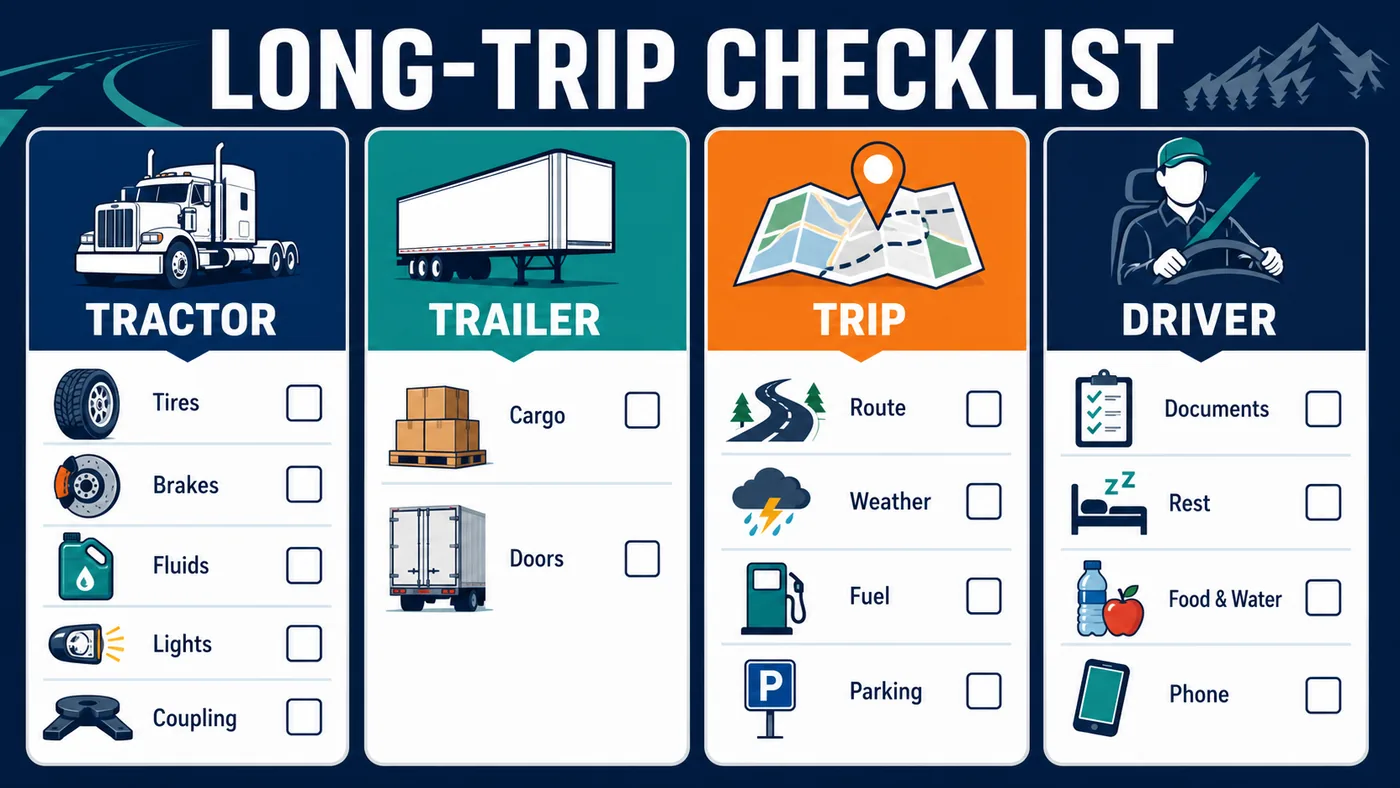
Quick Long-Trip Truck Preparation Checklist
Before leaving, ask yourself:
Tractor
- Tires inspected?
- Tire pressure checked?
- Wheels and lug nuts checked?
- Brakes working correctly?
- Fluid levels correct?
- No serious leaks?
- Belts and hoses inspected?
- Lights working?
- Mirrors clean and adjusted?
- Windshield and wipers good?
Trailer
- Tires and wheels inspected?
- Brakes checked?
- Lights working?
- Doors secure?
- Landing gear raised?
- Fifth wheel properly locked?
- Air and electrical lines connected?
- Cargo properly secured?
Trip
- Fuel sufficient?
- DEF sufficient?
- Route planned?
- Weather checked?
- Truck restrictions checked?
- Fuel stops planned?
- Parking locations identified?
- Delivery appointment confirmed?
- ELD hours checked?
Driver
- CDL and documents available?
- Phone charged?
- Food and water packed?
- Clothing packed?
- Emergency supplies available?
- Sleeper organized?
- Enough rest before departure?
Common Mistakes Drivers Make Before a Long Trip
Even experienced drivers can become rushed and overlook simple things.
Some common mistakes include:
Skipping the Pre-Trip Inspection
Saving ten minutes before departure is not worth spending several hours waiting for roadside assistance later.
Ignoring a Small Problem
A minor air leak, damaged tire, coolant leak, or unusual noise may become much worse after hundreds of highway miles.
Not Planning Parking
Waiting until your clock is nearly finished before searching for parking can create a difficult situation.
Blindly Following GPS
A navigation system does not replace professional trip planning.
Always verify that your route is appropriate for a commercial vehicle.
Forgetting Weather Changes
Conditions can be completely different in another state.
Check the entire route.
Leaving Without Enough Supplies
A long delay, road closure, winter storm, or breakdown can keep you in the truck much longer than expected.
Carry enough food, water, clothing, and basic supplies to handle unexpected situations.
Why Proper Preparation Matters
Preparing a semi-truck for a long trip is not just about preventing breakdowns.
Good preparation can help drivers:
- Improve safety
- Reduce delays
- Protect cargo
- Avoid roadside repairs
- Manage Hours of Service better
- Arrive at appointments on time
- Reduce stress
- Improve fuel and route planning
Professional drivers learn that many problems can be prevented before the truck ever leaves the parking lot.
Taking a few extra minutes to inspect equipment and plan the trip is almost always easier than solving a problem hundreds of miles down the road.
Final Thoughts
A successful long-distance trucking trip begins before the wheels start moving.
Inspect the tractor and trailer carefully, check your tires and brakes, verify fluid levels, inspect the coupling system, make sure the cargo is secure, and confirm that all important equipment is working properly.
Then prepare the trip itself.
Check your route, weather, fuel stops, Hours of Service, customer information, and parking options.
Finally, prepare yourself.
Pack enough food, water, clothing, emergency supplies, and personal items for the time you expect to spend away from home, and begin the trip well rested.
You cannot prevent every unexpected problem on the road.
But a thorough pre-trip inspection and good planning can significantly reduce the chances that a small issue turns into a major problem.
For an OTR truck driver, good preparation is one of the most important habits you can develop.