
How Truck Drivers Can Cut Fuel Costs on Long Hauls
Fuel is one of the largest operating expenses in trucking, and even a small improvement in fuel economy can make a noticeable difference over a year. The good news is that saving diesel does not require unsafe coasting, slow deliveries, or an expensive rebuild of the truck.
Most gains come from consistent driving, basic maintenance, smarter trip planning, and reducing the time the engine runs without moving freight. Drivers cannot control fuel prices, weather, or every delay at a dock, but they can control many of the habits that determine how efficiently a truck completes a route.
Begin With a Real Fuel-Economy Baseline
Before changing anything, record the truck's normal performance. Use several weeks of fuel and mileage data rather than judging one trip. A single run can be affected by headwinds, mountains, traffic, payload, winter fuel, or long periods of idling.
Track miles per gallon by route, load type, season, and tractor when possible. This creates a fair baseline and helps separate a useful change from normal variation. It also makes problems easier to spot. A sudden drop in fuel economy may point to low tire pressure, an air leak, a dragging brake, an engine issue, or a change in the route.
Drive Smoothly and Protect Momentum
Hard acceleration sends more fuel to the engine, while late braking throws away momentum that the truck used fuel to build. A smoother driver looks farther ahead, leaves space, and adjusts early when traffic begins to slow.
That does not mean driving slowly everywhere. It means choosing a steady, legal speed that fits the road, traffic, weather, and load. On rolling terrain, avoid racing downhill only to brake at the bottom. On busy interstates, a larger following distance can reduce repeated acceleration and braking.
Cruise control can help on open, relatively flat roads. In heavy traffic, steep grades, snow, or poor traction, the driver should use the method recommended for the equipment and conditions. Safety always comes before a fuel target.
Keep Tires at the Correct Pressure
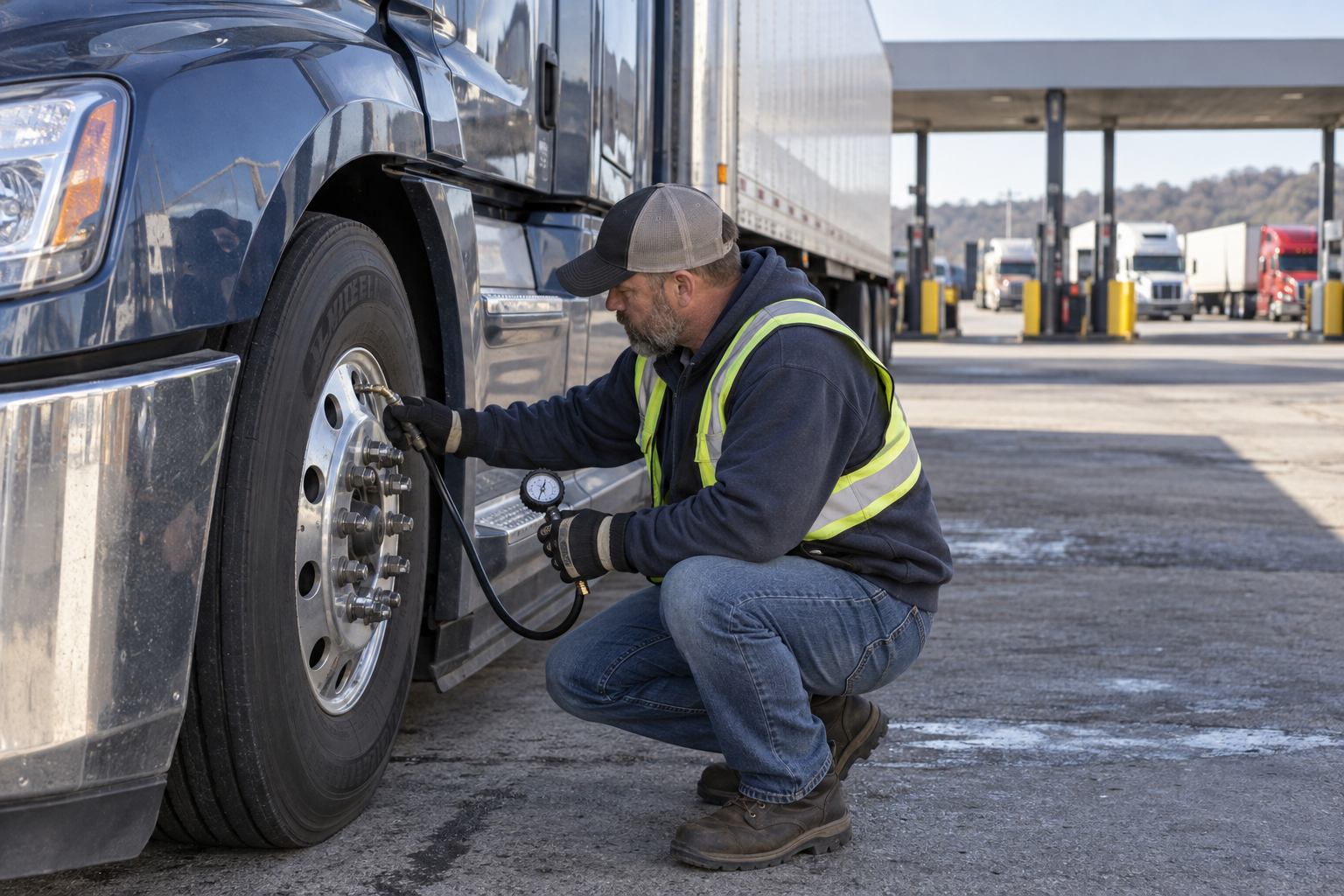
Underinflated tires create more rolling resistance and heat. They can also wear unevenly and increase the risk of a roadside failure. The U.S. Environmental Protection Agency's SmartWay materials note that proper inflation and low-rolling-resistance tire technologies can improve freight efficiency.
Check pressure when tires are cold and follow the tire, vehicle, and fleet specifications for the load. Inspect valve stems, caps, tread, and sidewalls at the same time. Do not forget the inside tires on dual assemblies. If the truck uses a tire-pressure monitoring or automatic inflation system, alarms still deserve a physical inspection.
Reduce Unnecessary Idling
An idling engine burns fuel while the truck covers no miles. Some idling is necessary for safety, equipment operation, extreme weather, or company procedures, but a large amount can often be avoided.
The EPA SmartWay idle-reduction program says a typical long-haul combination truck that eliminates unnecessary idling could save more than 900 gallons of fuel per year. Actual savings depend on climate, route, equipment, and how much the truck currently idles.
Auxiliary power units, bunk heaters, battery HVAC systems, automatic engine shutdown, and truck-stop electrification can provide heat, cooling, or electrical power without running the main engine continuously. Drivers should use equipment approved by the carrier and follow local idling rules.
Plan Stops Before the Truck Is Rolling
A good route saves more than time. It can reduce out-of-route miles, repeated searches for parking, unnecessary city driving, and last-minute fuel stops. Before departure, identify the truck-safe route, fuel locations, customer entrance, likely traffic problems, and at least two legal parking options.
Combine stops when practical. Fuel, food, inspections, and required breaks can sometimes be handled at one location. Avoid driving several extra miles for a slightly lower pump price unless the total savings exceed the fuel and time used to get there.
Our guide on preparing a truck for a long trip covers the mechanical and route checks that should happen before an OTR run.
Inspect Aerodynamic Equipment
At highway speed, the truck must constantly push air out of the way. Roof fairings, cab extenders, trailer skirts, wheel covers, and rear aerodynamic devices are designed to reduce that drag. They only work properly when they are intact, secure, and appropriate for the tractor-trailer combination.
During the walk-around, look for loose brackets, cracked panels, missing fasteners, or a trailer skirt that has been bent against a curb. Keep the tractor-trailer gap within the fleet's approved setup. Open windows, poorly secured tarps, and unnecessary exterior accessories can also disturb airflow.
EPA SmartWay maintains lists of verified aerodynamic devices, idle-reduction equipment, and low-rolling-resistance tires. Fleets considering upgrades can use those lists to compare technologies that have completed the program's verification process.
Do Not Ignore Small Mechanical Problems
A truck with a dragging brake, dirty air filter, misaligned axle, damaged aftertreatment system, or active engine fault may use more fuel than a healthy truck. Warning lights and unusual changes in sound, power, temperature, or fuel economy should be reported promptly.
Follow the maintenance schedule for engine oil, filters, cooling systems, wheel alignment, and other components. Use the correct lubricants and replacement parts specified by the manufacturer or fleet. A cheap shortcut can cost more if it reduces efficiency or creates downtime.
Match the Gear and Engine Speed to the Job
Modern diesel engines are designed to work efficiently within a specific operating range. Running in the wrong gear or holding high engine speed longer than necessary can waste fuel. Drivers should follow the engine manufacturer's guidance and the fleet's training for the transmission and load.
Automated manual transmissions can shift efficiently, but they still benefit from a driver who anticipates hills and traffic. Manual-transmission drivers should make clean shifts and avoid unnecessary revving. The best technique varies by engine, gearing, weight, and terrain, so generic advice should never replace the equipment manual.
Measure Progress Without Creating Pressure
Fuel reports are useful when they account for the work the truck actually performed. A driver pulling a heavy load through mountains should not be compared directly with an empty truck on flat interstate. Weather, traffic, idle requirements, and customer delays also matter.
Review trends over time and focus on changes the driver can control. A fair program rewards safe improvement and never encourages speeding downhill, following too closely, skipping necessary warm-up procedures, or driving while tired.
A Simple Fuel-Saving Routine
- Check cold tire pressure and inspect the tires during the pre-trip.
- Plan the truck-safe route, fuel stop, customer entrance, and parking before departure.
- Accelerate smoothly, leave space, and avoid unnecessary braking.
- Use cruise control only when traffic, terrain, weather, and company policy make it appropriate.
- Shut down unnecessary idling and use approved sleeper-comfort equipment.
- Inspect aerodynamic panels and report damaged parts.
- Report fault codes, dragging brakes, alignment problems, or sudden MPG changes.
- Compare fuel economy over several trips instead of chasing one perfect number.
Final Thoughts
Fuel efficiency is usually the result of many small decisions repeated every day. Smooth driving, correct tire pressure, less unnecessary idling, better route planning, sound maintenance, and working aerodynamic equipment all contribute.
Drivers do not need to sacrifice safety or comfort to save fuel. The most effective approach is to understand the truck, plan the trip, measure results fairly, and improve one controllable habit at a time.
Sources: EPA SmartWay — Idle Reduction; EPA SmartWay Verified Technologies; U.S. Department of Energy — Heavy-Duty Truck Idle Reduction Technologies.