
Heavy Rain and Semi-Trucks: A Practical Wet-Weather Driving Plan
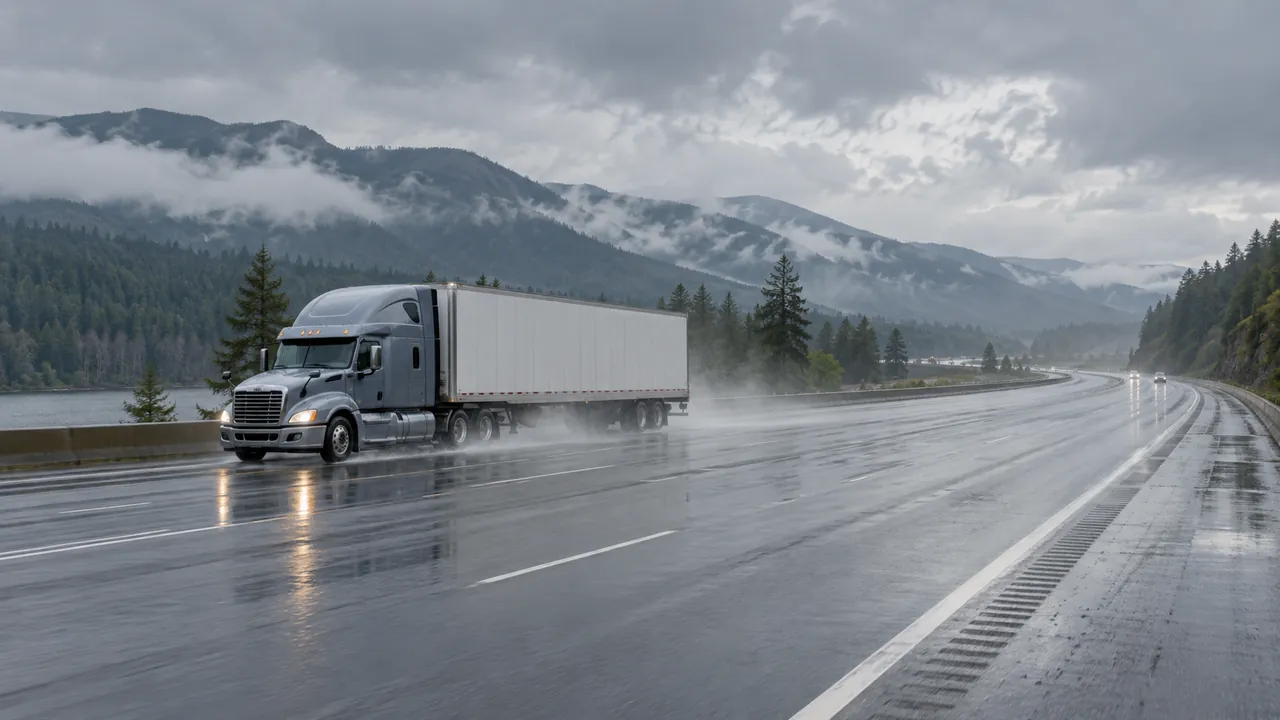
Rain changes a trucking shift in several ways at once. The road surface becomes less predictable, spray hides smaller vehicles, lane markings can disappear in reflections, and a familiar delivery schedule suddenly needs more room. The problem is rarely solved by making one dramatic adjustment. A better approach is to recognize the changing conditions early and make several calm decisions before the workload becomes overwhelming. That starts with the truck's visibility equipment, continues with the space around the vehicle, and includes a realistic plan for stopping when conditions no longer support safe progress.
Wet-weather preparation should be specific to the vehicle and the route. A driver hauling a familiar trailer across an open interstate may face a different challenge from someone entering a congested city with standing water and poorly marked turns. Traffic density, lighting, road condition, and visibility all matter. No single speed or following-distance number fits every combination of those conditions. The practical goal is to leave enough time and space to respond smoothly, while following the carrier's training, vehicle instructions, and posted requirements.
Check what helps you see and be seen
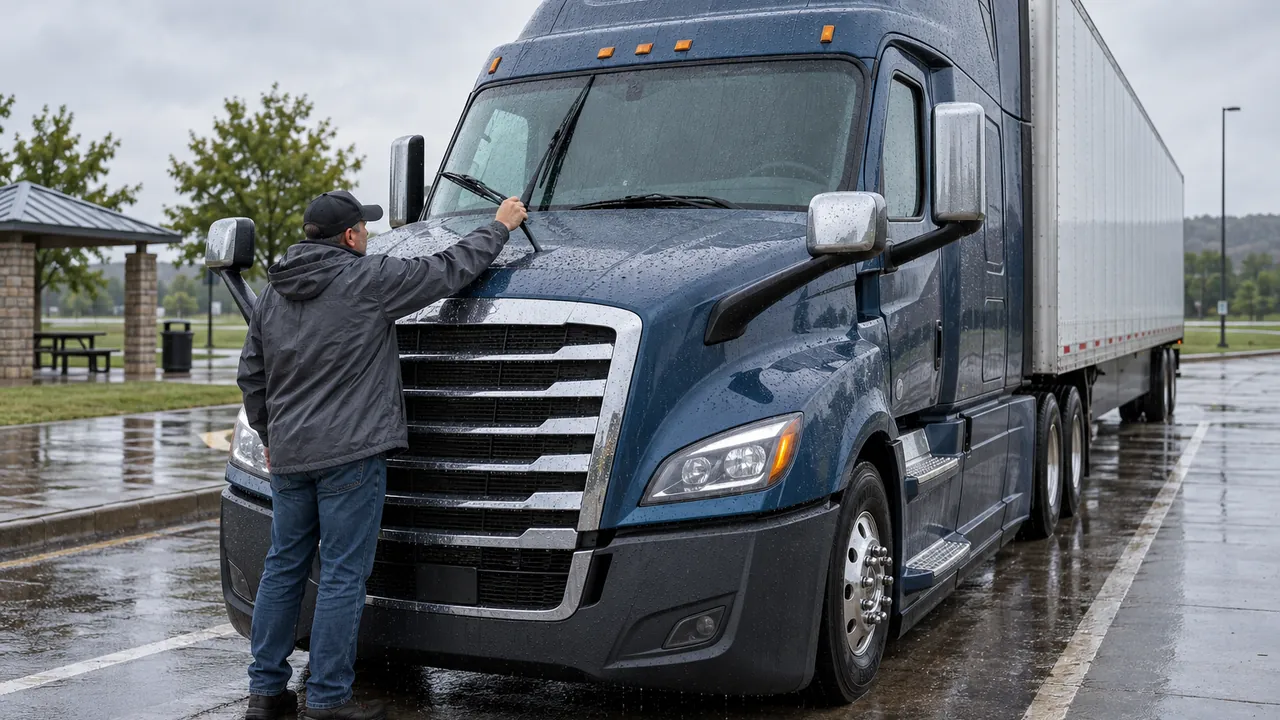
Before departure, inspect the windshield, mirrors, wiper blades, washer supply, and required lights as part of the vehicle's normal inspection procedure. A smear that is merely irritating on a dry morning can become a major distraction when headlights reflect through a wet windshield. Report damaged blades, poor washer delivery, or a defogging problem through the carrier's defect process. Do not assume that increasing the wiper speed will compensate for equipment that is not working properly. Visibility problems deserve attention before the truck joins traffic.
Keep the cab organized so that cleaning materials and essential equipment do not become loose objects. Make any necessary adjustments while parked, and ensure that nothing obstructs the driver's view or interferes with the controls. Outside checks should be performed from safe positions, without climbing on wet surfaces to reach an awkward area. If a task cannot be completed safely at the current location, arrange appropriate help rather than improvising a method that introduces a different hazard.
Make room before traffic forces the issue
The most useful space cushion is the one created before a vehicle ahead begins braking. Watch how traffic is moving beyond the nearest car, and avoid letting a compressed line of vehicles dictate an uncomfortable gap. More room gives the driver greater opportunity to react gradually when spray suddenly reduces visibility or another vehicle changes lanes. It also reduces the need to combine several decisions at once. Trying to identify a hazard, find an escape route, and slow a heavy vehicle at the same moment is a demanding way to drive.
The FMCSA's guidance on following too closely explains that following distance should reflect weather, road conditions, visibility, and traffic. Its advice is a reminder to reassess the available space when conditions deteriorate rather than simply carrying a dry-road habit into the rain. Use the carrier's training to judge an appropriate margin, and keep reassessing it as the traffic pattern changes. A gap that felt comfortable before a downpour may no longer offer a useful view of the road.
Read visibility changes as early warnings
Spray from nearby vehicles can reduce the available view even when rainfall itself seems moderate. Reflections can also make the edge of a lane or the shape of a junction harder to identify. Notice these changes before they lead to missed information. If signs are becoming difficult to read in time, or the road ahead repeatedly disappears behind spray, the current driving plan needs adjustment. Continuing at the same pace while hoping the view improves is not a dependable strategy.
At night, glare can make an already wet environment more tiring. Clean glass helps, but it cannot remove every visual limitation. Keep attention on the driving task and avoid trying to solve navigation, dispatch, or entertainment problems at the same time. If an exit or entrance cannot be identified safely, do not make a sudden maneuver to catch it. Follow an appropriate continuation route and review the next option after stopping somewhere suitable. Missing a turn is usually easier to resolve than recovering from an abrupt decision.
Treat standing water as missing information
A patch of water may hide a damaged surface, an obstruction, or a depth that is difficult to judge from the cab. The fact that another vehicle crossed it does not establish that the route is suitable for your truck. Avoid using wheel tracks or the appearance of a nearby shoulder as a substitute for reliable information. Posted closures and barriers must be respected, and uncertainty about a flooded access road should be raised with dispatch and the relevant road authority or facility.
The NHTSA's severe-weather guidance emphasizes reducing speed on slick roads, leaving additional following space, checking conditions, and avoiding flooded roads. For a commercial driver, those general principles belong within the carrier's operating procedures and the specific vehicle's requirements. They do not justify experimenting with water depth or treating the size of a truck as protection against a road that has become unsafe.
Plan a stop before the situation becomes urgent
Review suitable stopping opportunities while the route is still straightforward. A legal rest area, truck stop, or other approved location can provide a place to assess the weather, clean visibility surfaces, and contact dispatch. A narrow shoulder is not an interchangeable substitute for a planned stop. When conditions require an immediate safety response, follow the carrier's training and the circumstances on the road; when there is time to plan, use that time to identify a more appropriate place to wait.
A stopping decision should consider the place as well as the weather. Check access, parking rules, available space, and whether the location itself may flood. Do not park in a travel lane, on an access ramp, or in a position that creates another obstruction simply because the rain is unpleasant. Once safely parked, reassess the information needed for the next decision: current road notices, visibility, facility access, available duty time, and whether the delivery appointment can still be met without pressure to hurry.
Send an update that helps dispatch act
A useful weather update is factual and brief. Identify the affected road segment, what you can currently observe, whether you are moving or safely parked, and what information you need. Avoid giving a precise revised arrival time before the route conditions are understood. Dispatch may need to alert a receiver, check a closure, or rearrange an appointment. Early notice gives those people more options than a late message sent after the schedule has already fallen apart.
After the shift, report equipment issues and any location-specific access problem that the next driver should know about. Wet-weather driving is not a contest to preserve a dry-weather schedule. It is a continuing process of protecting visibility, space, and decision time. A well-prepared truck and a realistic communication plan make it easier to recognize when conditions are manageable and when the sensible next step is to stop and reassess.