
Planning a Trucking Day When Heavy Rain Is Forecast
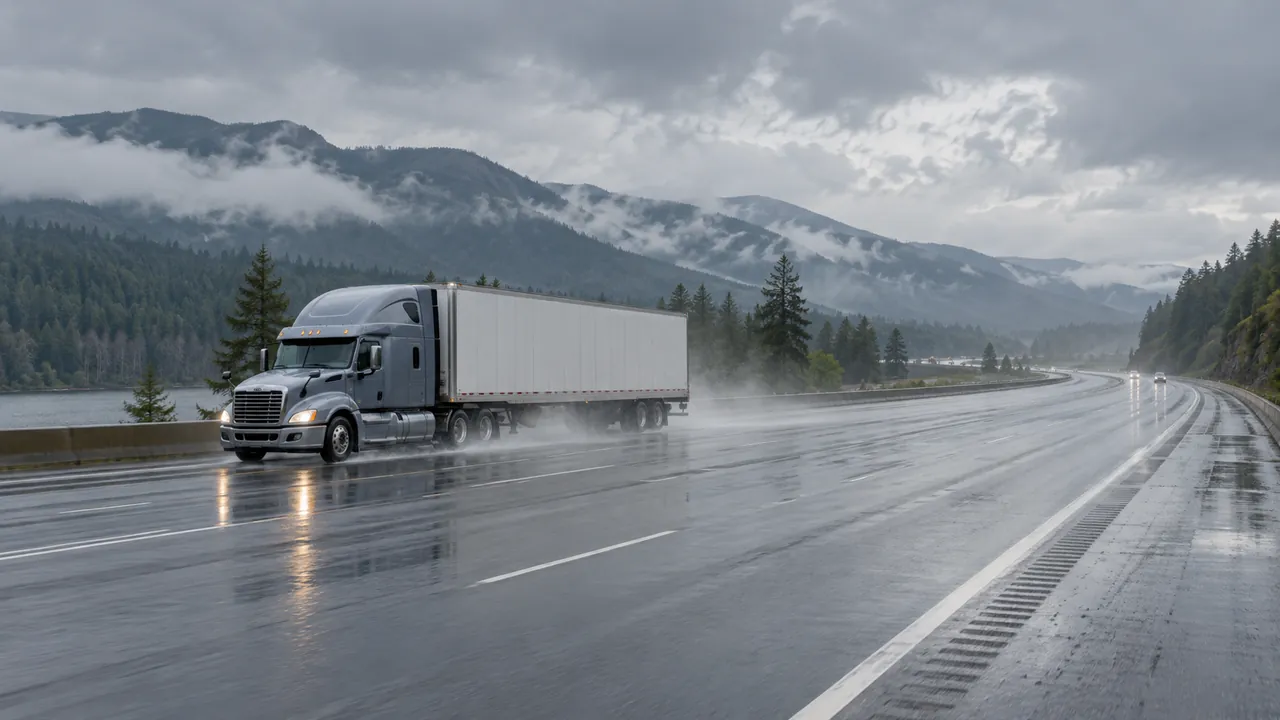
Rain affects a trucking day long before water appears on the windshield. It can slow the approach to a receiver, reduce the usefulness of a familiar parking area and turn a narrow appointment window into a series of calls. A practical wet-weather plan connects the forecast, the route and the places where a driver can stop. It also gives dispatch a clear account of what remains uncertain, so an early schedule can be adjusted before it becomes pressure on the road.
Read the forecast along the route
Begin with the planned journey rather than a weather icon for the departure city. A long route may pass through several forecast areas, and the most difficult period may coincide with the final approach. Look at the expected timing, official warnings and the locations named in them. Record the time you checked so an older screenshot is easy to recognize.
Use official information for the relevant area and revisit it while safely parked if the journey changes. The National Weather Service flood safety pages are a useful starting point in the United States. Your carrier's operating procedures and local road information are also part of the decision. A general forecast cannot establish whether a particular access road remains usable.
Inspect the things rain makes important
Build weather preparation into the normal inspection rather than treating it as an extra task done after departure. Follow the vehicle's instructions for visibility equipment, including wipers, washers, lights, mirrors and demisting. Report defects through the carrier's process. Keep the observation specific enough for a maintenance team to understand what needs attention.
For example, a note that the left wiper leaves an uncleared strip gives more information than saying the wipers are poor. A photograph taken while parked may help show the affected area if company policy allows it. Let qualified personnel determine the repair and service status. The appointment time should not become the reason an unresolved visibility problem disappears from the record.
Identify a stopping option before the difficult stretch
A trip plan needs places to pause that are suitable for the actual combination. Look at the route segment expected to receive the worst weather and identify options before entering it. Check the carrier's approved facilities and any current access information. A large area on a satellite image may be private property, full or separated from the route by an unsuitable approach.
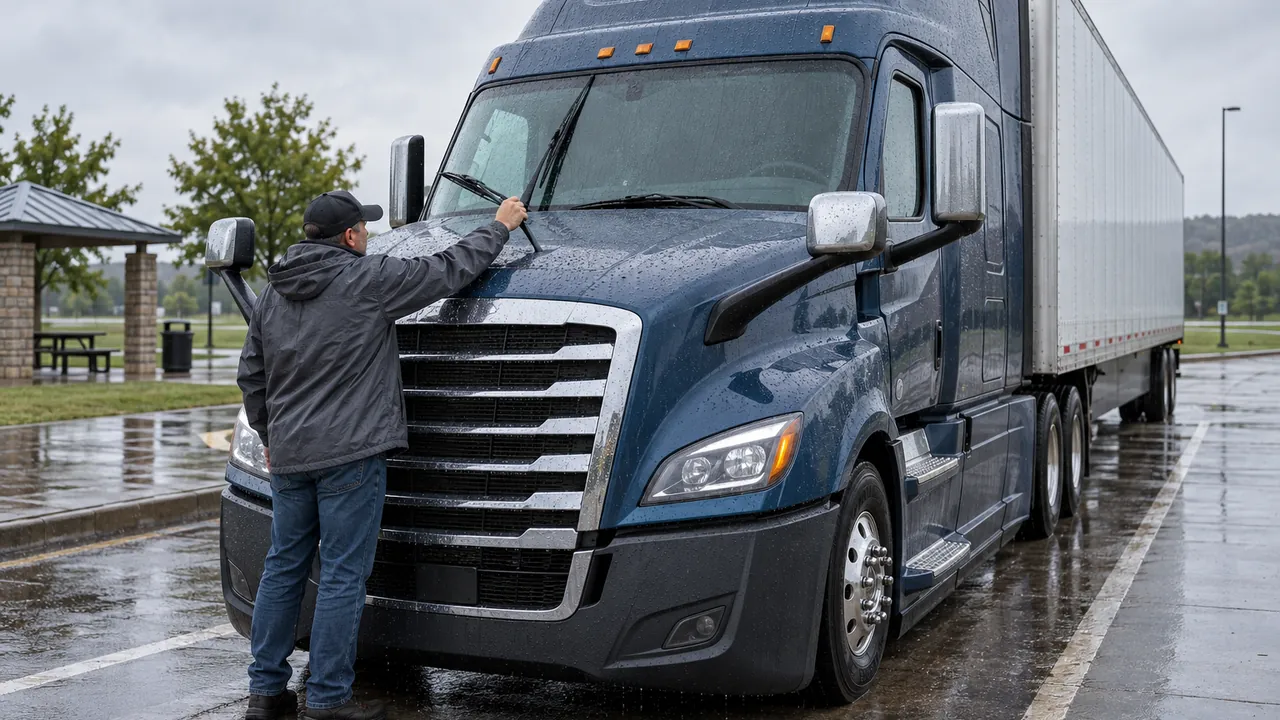
Keep a second option in mind. Weather can increase demand for parking or close an entrance that is normally available. The aim is to avoid making every decision at the point where conditions are already deteriorating. A stopping plan should help the driver act on the conditions encountered, with dispatch aware that the planned arrival may need to move.
Give dispatch useful information about timing
A weather update is more helpful when it separates the current position from a prediction. State where you are, what official restriction or observed condition affects the next segment and when you can provide another update. An estimated arrival can remain an estimate. Repeating it confidently does not make the weather or the receiving slot more certain.
Consider a fictional afternoon delivery. The route remains open, but the receiver's access road is reported to be affected by flooding. Dispatch can contact the receiver to confirm its status before the truck reaches the final interchange. The answer may change the destination, the appointment or the decision to wait. Each is easier to coordinate before the driver is committed to the last few miles.
Treat flooded access as a separate problem
Do not infer water depth or road condition from another vehicle crossing a flooded area. A photograph can hide damaged pavement, flow and changes beyond the visible edge. Follow official closures and the carrier's procedures, and seek an appropriate alternative through dispatch. The receiver can describe its location, while the responsible road authority provides closure information.
The National Weather Service's Turn Around Don't Drown guidance explains the danger of entering floodwater. Keep that principle connected to practical planning. A revised appointment, a held load or a different approved receiving point is preferable to making an uncertain crossing the only way the original schedule can work.
Keep delivery paperwork usable

Wet-weather organization also matters after the truck stops. Protect documents using suitable covers or storage and keep the current reference easy to retrieve. A driver should not have to search through loose damp pages while speaking to a gate clerk. Ask the carrier how it wants originals handled if scanning equipment or a phone becomes wet or unavailable.
Record a change at the point it affects the job. If the site asks the vehicle to wait at an approved holding area, note the confirmed instruction and the relevant time. Avoid treating a requested arrangement as accepted until the responsible parties have confirmed it. Clear documentation helps the next dispatcher understand why a normal visit took longer.
Review the day without using hindsight as a shortcut
After the trip, compare the forecast checks, stopping options and actual decisions. Ask whether the driver had the necessary information early enough. A forecast that changed is different from a warning nobody checked. A full parking area is different from a stopping option whose approach was unsuitable from the start.
Keep one or two improvements for the next wet-weather journey. That might mean checking the receiving road earlier, adding an approved parking alternative or making the next update time explicit in dispatch messages. A useful rain plan grows from these concrete corrections. It gives the driver room to respond to conditions and gives the office enough information to support that response.
## Give the next shift the current weather picture
A driver change can occur after several forecast updates. Hand over the latest confirmed route arrangement, the source of a restriction and the next planned check. Keep an earlier proposed diversion out of the action line if it was never approved. Ask the incoming driver to identify the next suitable stopping option from the packet. If that answer depends on an extra verbal explanation, add the missing location or reference. The handover test catches an information gap before the journey continues, and it lets dispatch see which part of the plan needs another confirmation.